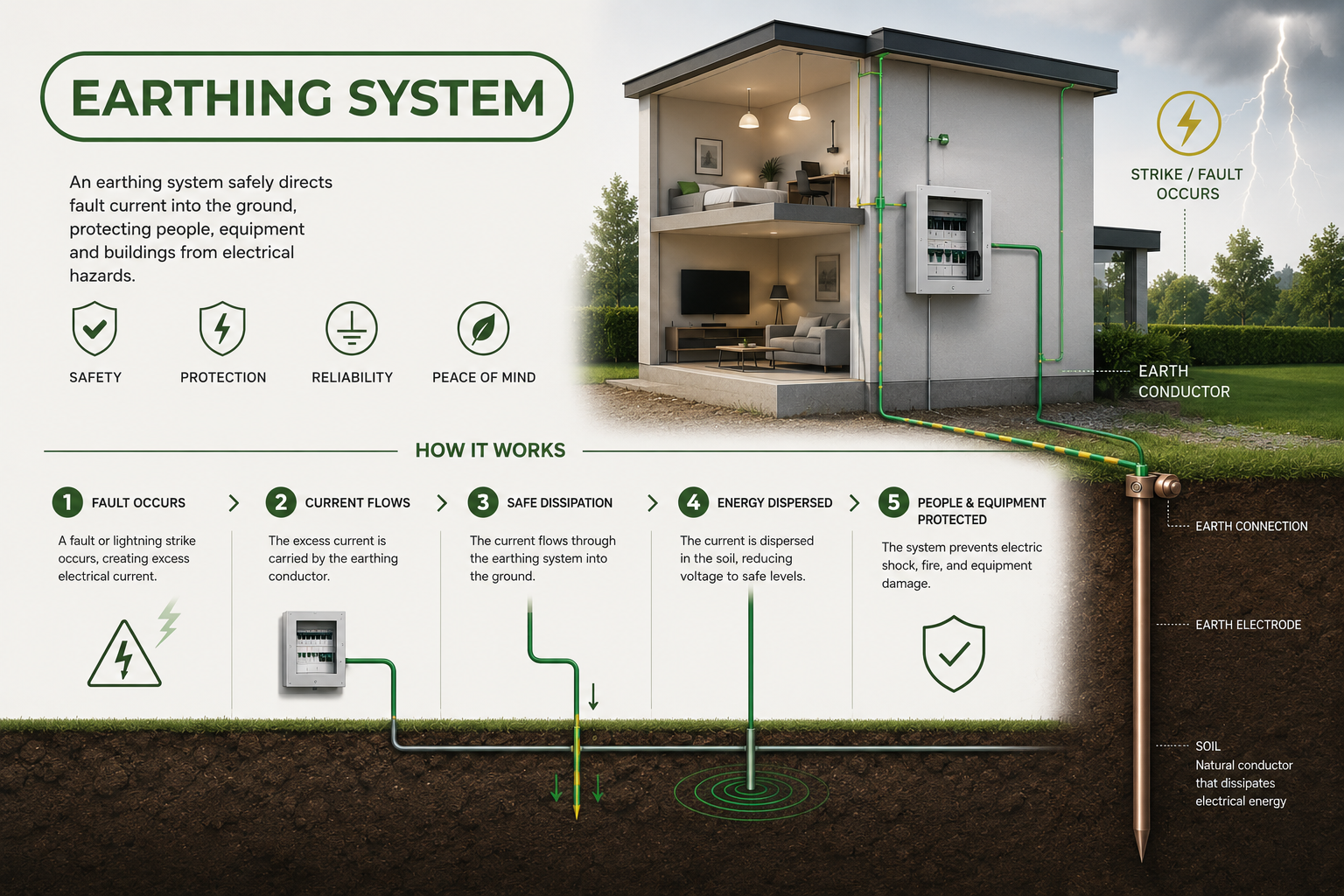
EARTHING SYSTEM
Earthing is a critical component of photovoltaic solar power systems, providing essential protection for both electrical equipment and people. Since solar installations are exposed to outdoor conditions, weather fluctuations, and potential lightning strikes, a properly designed earthing system helps maintain safe and reliable operation.
Key Functions of Earthing in Solar Systems
Lightning Protection
Provides a controlled path for lightning currents to safely dissipate into the ground, helping protect sensitive electrical components.
Equipment Protection
Helps protect solar panels, inverters, and other electrical equipment from overvoltage and sudden electrical surges by providing a low-resistance path for excess current.
Personnel Safety
Reduces the risk of electric shock by directing fault currents safely to earth instead of through a person in the event of an electrical fault.
System Stability
Supports electrical system stability and helps reduce electromagnetic interference, contributing to reliable system operation.
Applications
- Solar Panel Earthing: Connecting the metallic structures of photovoltaic panels to the earthing system.
- Inverter & Transformer Earthing: Earthing inverters, transformer enclosures, and combiner boxes to support the protection of DC and AC circuits.
- Lightning Protection: Earthing arrangements designed to safely dissipate lightning energy into the ground.
Recommended Practices
- Use high-quality, corrosion-resistant copper conductors and connections.
- Where required by the system design and soil conditions, use multiple earthing electrodes with appropriate spacing.
- Maintain appropriate separation and coordination between DC and AC earthing arrangements.
Protection from the ground up.
A properly designed earthing system is fundamental to the safety, protection, and reliable operation of solar power installations.